
www.shihaitao.art

Artist / 艺术家
www.shihaitao.art
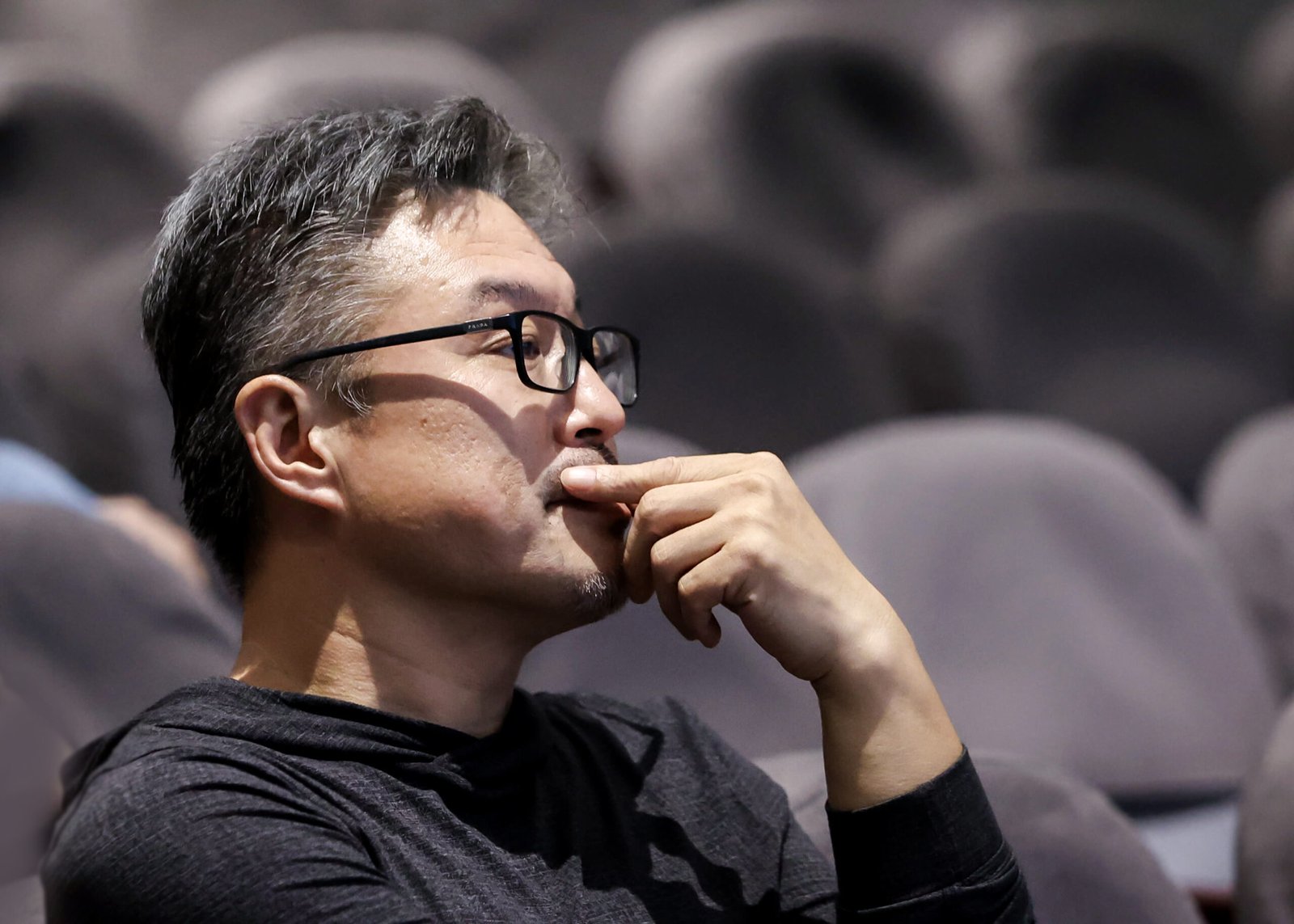
Shi Haitao
A Chinese artist, was born in Qingdao, Shandong Province. He graduated from the Department of Stage Design at the Central Academy of Drama, with extensive experience in theater. Over the past decade or so, he has focused on the exploration and practice of painting, and has been living and working in Beijing for a long time.
石海涛
祖籍山东青岛,毕业于中央戏剧学院舞台美术系,有丰富的舞台工作经验。 近十余年专注绘画领域的探索与实践,长期工作生活在北京。
Interview / 访谈
Artist Interview | Shi Haitao × CAFA ART INFO
Date: September 15, 2021; April 17, 2022 Venue: Artist’s Studio, Shunyi, Beijing Interviewer: Zhou Weimeng
艺术家访谈 | 石海涛×艺讯网
时间:2021年9月15日,2022年4月17日 地点:艺术家工作室,北京顺义 采访:周纬萌
Q1
The exhibition Backlight is a relatively complete review and presentation of your creations in recent years. Taking this opportunity, could you briefly review your art and reflections in recent years? What does the subsequent publication of Backlight · Exhibition · New Documents signify?
展览《逆光》是您近年来创作的一次较为完整的梳理与呈现,能否以此为契机简要回顾您近年来的艺术与思考?展览之后,《逆光·展览·新文献》的诞生又意味着什么?
Shi Haitao: Over the past 8 years, I have been creating in a state of peace and have not been in a hurry to present my achievements to the public. In fact, there were opportunities to hold exhibitions in recent years, but I always felt that my creations were not yet complete enough. It was not until I went to Shanghai earlier and communicated with the team of Powerlong Art Museum that the “counter-trend” themes and expressive methods in my works attracted their attention. Many art creations that conform to market trends tend to discard the so-called “heavy ideological burdens” and focus more on intuitive aesthetic experience—and this is precisely what I want to avoid.
石海涛:在长达8年的时间中,我一直处在一种平和的状态中去创作,也并不急于要将自己的成果对外呈现。其实在这几年间也有一些机会可以做展览,但那时我总觉得自己的创作还没有那么完整。直到此前我去到上海,和宝龙美术馆馆方进行交流时,我作品中的这种逆潮流而上的关注议题与表现方式反而引起了他们的关注,顺应市场潮流的艺术创作很多会抛弃掉所谓的沉重的思想包袱,更在乎一种直观的审美体验,而这恰恰是我想要规避的。
Since the sudden outbreak of the pandemic until now, most people have had to interrupt their original plans and rhythms. However, this pause has unexpectedly allowed for proactive reflection. I think people have begun to develop a sense of proactive collective awareness, making this an appropriate time to present the macro historical perspective and reflections I have wanted to explore in my creations over the years. In my view, most people’s life insights are based on their limited experiences over a lifespan of about a hundred years. From this perspective, the pandemic is undoubtedly a major and special event. But if we measure it against the long river of history, it may not be that special—human history has seen many similar events.
从疫情骤然而至到如今,大部分人中断了原定的计划与节奏,而在这样的停顿之下反而得以实现主动的反思。我觉得人们开始有了一种主动的集体意识,此时来呈现我这几年来在创作中想要去探讨的一种宏观历史视野与思考反而是一个合适的契机。在我看来,大部分人的人生感悟实际是依托于自己生命中百十来年的有限经历,这样看来疫情无疑是巨大而特殊的一个事件,但如果将它放在历史的长河之中来衡量,它或许没有那么特殊,人类历史上曾经发生过很多类似事件。
Before and after the exhibition, many friends and viewers resonated with the themes discussed in my works and the atmosphere created at the exhibition venue. This strengthened my idea of documenting, preserving, and continuing to reflect on my creations during this period through a “document collection.” Thus, the compilation and production of Backlight · Exhibition · New Documents was put on the agenda. I hope that while reviewing the immersive exhibition scene, this genuine and shared experience can be extended to paper-based reading. At the same time, I also look forward to the possibility that paper-based reading—something that seems “outdated”—can spark new possibilities with my creations. Therefore, beyond the presentation of conventional exhibition documents, we tried to construct a “paper-based play” to make up for the fleeting emotional experiences in the actual exhibition and provide another way to engage with my creations.
展览发生前后,很多朋友、观众对我作品中讨论的议题以及展览现场营造的氛围有所感触,这坚定了我想以“文献集”的方式来记录、保存与继续思考我这一阶段创作的想法。于是,《逆光·展览·新文献》的编撰与制作被提上日程,我希望在回顾沉浸式展览现场时,能将这种真切而共同的体验延伸至纸本阅读中来;同时,我也期待看似已经“过时”的纸本阅读能与我的创作碰撞出全新的可能性,所以我们在常规展览文献的呈现外,尝试构建了一场“纸上剧”,用以补足实际展览中那些稍纵即逝的情感体验,也为进入我的创作提供了另一条路径。
Q2
We can directly feel the profound influence of “drama” on your ideological concepts and artistic expression in many of your works. What do you think is the impact of your past drama experience on your concepts and artistic expression?
我们在许多作品中都直白地感受到了“戏剧”对您思想观念和艺术表达的深刻影响,您认为过往的戏剧经验对您的观念和艺术表达有何影响?
Shi Haitao: I think artists have many different paths to choose from. They can pursue the purity and authenticity of painting inwardly, and this choice has also produced many excellent artists. However, my choice is that in addition to being a medium form, painting can also undertake a role and responsibility of inspiration and even guidance. Beyond the so-called artistic techniques, I believe that artistic creation should emphasize ideological content more. As an artist, one is not merely a painter. This group actually belongs to the broader category of intellectuals in the entire social composition, and I believe that intellectuals cannot abandon their responsibility to society. I unconsciously have such a sense of responsibility, and the establishment of this sense of responsibility may actually have a lot to do with my reading when I was young, especially reading a series of philosophy history books, which also cultivated my perspective of caring for all mankind.
石海涛:我觉得艺术家有很多不同的路可以去选,可以向内去追求绘画的纯粹性和本真性,这种选择也成就了非常多好的艺术家,但我的选择是绘画在成为一种媒介形式之外,还能去承担一种启发甚至是引领的作用与责任。除了所谓的艺术手段之外,我认为艺术创作更多地要强调思想性。作为一个艺术家,其实不单纯是个画家,这个群体在整个社会构成中其实是属于知识分子的大范畴之中,我认为知识分子对社会的责任是不能抛弃的。我不自觉的有这样一种责任感,而这种责任感的建立,其实可能和我年轻时候的阅读有很大的关系,尤其是一系列哲学史书籍的阅读,也培养了我形成一种关照全人类的视角。
In my experience of studying drama at the Central Academy of Drama, a very important point is that in addition to learning art-related knowledge, we also had to study drama history, thus gaining exposure to thousands of years of works from ancient Greek myths to various classic tragedies and comedies. In this process, a so-called “hypothesis” in drama was gradually established in my mind and vision, which I understand as an exchange of relations between the stage and the audience: actors on the stage need to perform a real story in a hypothetical situation and be able to move the audience. I think this intricate artistic form is particularly rich. It contains elements of traditional art history and literary history, showing more profound characteristics. Another key point is “dramatic nature”. Many people think that the surface drama of my works is very strong, but I think the core of the real dramatic nature lies in the fact that we need to explore the factors that trigger actions and thoughts behind these superficial dramatic tensions. Relying on hypothesis and dramatic nature, and then grafting with fine arts, it will make the expressive force of the works stronger. Generally speaking, the most valuable influence of drama experience on me is that it has shaped my perspective of looking at problems and my way of examining the world. It is precisely because of this that my works present such a state.
在中戏的戏剧学习经历中,很重要的一点是我们除了要学习美术类的知识外,我们还要学戏剧史,由此得以涉猎几千年来从古希腊神话到各种经典悲喜剧等。在这个过程当中,我的思想与视野中逐渐建立了一个戏剧中所谓的“假定性”,我将它理解为台上和台下的一种关系互换:台上的演员需要在一个假定的情境里去表演一个真实的故事,并且能让观众有所感动,我觉得这种错综复杂的艺术形态是特别丰富的,它包含了传统美术史、文学史的一些内容,而显现出更丰厚的特质。另一个要点则是“戏剧性”,很多人看我的作品觉得表面的戏剧性很强,而我觉得真正的戏剧性的核心在于我们需要去探究这些表面的戏剧张力背后去那些触发行动和思想的因素。依托于假定性和戏剧性,再和美术进行嫁接,它会使得作品的表现力变得更强。总体来说,戏剧的经验对我而言最有价值的影响在于它塑造了我看问题的角度以及审视世界的方式,也正因如此,我的作品才会呈现出这样一种状态。
Q3
Why did you choose to return to pure artistic creation?
您为何会选择回归到纯粹的艺术创作中来?
Shi Haitao: As we know, theater involves several elements, including the script, director, actors, and theater space. These elements make theatrical creation a relatively collective model. Fine arts, in this context, play a role in establishing the overall dramatic context of the entire play, while actors present a complete story within this context. Therefore, at that time, stage design occupied a very important position in a theatrical work. However, contemporary Chinese theater barely discusses anything other than actors; the behind-the-scenes creation, by contrast, is easily overlooked. This is actually a reflection of the impetuousness of society.
石海涛:我们知道戏剧中会涉及到几个要素,包括剧本、导演、演员、剧场等,这些要素也使得戏剧创作是一个相对集体的创作模式,而美术在其中起到的作用是去建立整个戏剧的戏剧情境,而演员是在这个情境中去呈现一个完整的故事,因此在那时,舞台美术在一部戏剧中是很重要的一个位置。但如今中国的戏剧几乎都在谈演员,反而那些幕后的创作被轻易忽略了,这其实也是社会浮躁的一个体现。
Later, I gradually realized that theatrical creation relies on too many links. It can hardly become an independent artistic work of one’s own, nor can it fully express one’s own ideas. Gradually, I also noticed that the on-site appeal of theater was no longer strong enough. I then made a series of other attempts to express my own voice—such as the idealistic effort to establish a musical theater academy to train my own actors, or engaging in the creation of more popular film scripts. But I realized that all these forms of collective creation could hardly meet the state I expected. When I looked back at painting, I found that it is an expressive form entirely based on the size and scale that I can control. Its reliance on external factors may be more about technical issues rather than the expression of ideas. I hoped that my creation could express my thoughts relatively completely, and I thought painting might be the best way to do this. Thus, after going around in circles, I returned to the field of fine arts.
The presentation of the exhibition Backlight has helped many friends who initially did not understand my choice to reconcile with it. On the one hand, they are deeply moved by my persistence in creation over the past 8 years; on the other hand, they recognize that the connection between my ideological context and this series of creations is relatively complete.
后来我渐渐意识到戏剧创作中依赖的环节特别多,它不太可能成为自己独立的一个艺术作品,也很难完整地表达自己的思想。逐渐的,我察觉到戏剧的这种现场感染力已经不够强了,我开始做一系列其它尝试希望来表达自我的声音,比如很理想化地筹办音乐剧学院培养自己的演员,或是投身于更加大众化的电影剧本创作等,但我意识到这些所有的集体创作都很难达到我所期望的状态。再回观画画这种方式,它反而是完全基于自己可掌控的尺幅和体量在表达,它对外部的依赖可能更多在于技术性问题而非思想性的表达。我希望自己的创作可以相对完整地表达自己的思想,我觉得这可能是一种最佳方式,于是我又兜兜转转回到了美术的范畴中来。
展览《逆光》的呈现让很多当初不理解我作出这样选择的朋友也释怀了,一方面他们特别有感于我8年来对创作的坚守,另一方面他们也认同我的思想脉络与这一系列创作之间的结合是相对完整的。
Q4
Regarding the choice of media, as you just mentioned that painting is a relatively comfortable way for you to express yourself, and in earlier creative stages, such as the “Slice” series, you seemed to have experimented with many rich materials and methods. Could you talk about your process and experience over the years in finding your own painting language in your creations?
在媒材选择方面,正如您刚刚谈到绘画是您运用比较自如的一种方式,而在较早的创作阶段中,比如切片系列中,您似乎也尝试过很多丰富的材料和手段。能否聊聊您这些年在创作中找到自己绘画语言的过程和体验?
Shi Haitao: In recent years, my creations have gone through different stages, and “Slice” is a series with a relatively distinctive style. When I couldn’t help but want to paint at first, I would also think about a question that every artist faces: what to paint? How to paint? At that time, I mostly hoped to find a unique way of my own. Because ideology is deeply rooted, the presentation of any language medium will rely on one’s own mode of thinking. So, I first put a lot of effort into differentiation, doing many experiments and explorations with different methods. It wasn’t until 2014, in the “Slice” series, that I thought I had found my own symbolic language, which could be logically consistent with my thoughts on the relationship between people and history, and I felt very excited. But then this sense of excitement gradually faded. I lingered in the “Slice” series for many years, constantly trying various methods such as installations, sculptures, and 3D printing, and gradually realized that many times we are also trapped by technology.
石海涛:这几年中,我的创作经历了不同的阶段,“切片”是其中风格比较鲜明的一个系列。在最初忍不住想画时,我也会思考每个艺术家都会面临的一个问题,即画什么?怎么画?当时更多的是希望找到一种属于自己的独特方式,因为思想性是根深蒂固的,任何语言媒介的呈现都会依托于自我的思想模式,所以我最早是在差异化上去下了很多功夫,做了很多不同方法的实验和探索,直到2014年,在切片系列中,我认为我找到了属于自己的符号化语言,并且能与我对人和历史的关系的思考逻辑自洽,我觉得非常兴奋。但随即这种兴奋感便越来越弱,在切片系列中我游离了很多年,不断去尝试比如装置、雕塑或是3D打印等多种方式,渐渐地也意识到很多时候我们也在为技术所困。
I used to focus more on the concept of the individual, but later I had an epiphany, realizing that there is also the concept of the group corresponding to the individual. My creative subjects began to change, and taking this as an opportunity, I realized that when I don’t confine myself to a narrow painting space, carrying the burden of those techniques and methods, but instead first focus on what I want to express, I gradually find a proper and comfortable path. After changing my thinking, I found that many methods can be used by me, and the transition to the painting stage became more comfortable. At this time, revising some past parts also went more smoothly. Generally speaking, it is a process of choosing technology, being trapped by technology, and finally surpassing technology. In recent years, I have created several works using the methods from that year, because I think that kind of language allows the current creations to be expressed more freely. After breaking through technical barriers, I can switch freely between media languages when facing different topics and objects. Of course, this repetition of language has brought some doubts. For example, some people think that my creative style is unstable and lacks the symbolism that most artists need first, making it difficult for the market to have a clear judgment or understanding of my creations. But I just want to avoid such symbolic labels and am very vigilant about being bound by a certain media language. I don’t want to examine myself from the logic of market choices. I think my ideological context is complete, which makes my creations ultimately point to the same logic no matter what language or way I use.
我之前更多关注的是个体的概念,但后来也有所觉悟,意识到与个体相对应的还有一个群体的概念,我的创作对象等也开始进行转变,也以此为契机,我觉察到当不把自己禁锢在一个狭隘的绘画空间中,背着那些技术和方式方法的包袱,转而首先关注到自己想表达什么,这时候反而逐渐找到一条恰当而自如的道路。转换思想之后,我发现很多的手段都可以为我所用,转到绘画这个阶段则更显自如了,此时再把过去的一些部分进行修正也会更顺畅。总体来说还是一个技术选择,被技术所困,最后超越技术的过程,近几年也有几幅作品是用当年的方法在创作,因为我认为那种语言会让当下的创作被更自如地表达,打破了技术壁垒之后,面对不同的议题和对象,媒介语言之间的切换是可以游刃有余的。当然这种语言的反复也带来一些质疑,譬如有人认为我的创作风格不定,不具备现在多数艺术家首先需要的符号化,这样市场难以对我的创作有一个清晰的判断或者认知。但我恰恰想要回避这种符号化的标签,也很警惕被某一种媒材语言束缚,我并不想把自己放在市场选择这样一种逻辑中来审视自我。我想我的思想脉络是完整的,这使得不管我使用什么样的语言或者方式,我的创作最终会指向同一种逻辑。
Q5
Your video work Echoes, co-created with Yang Yanyuan, is a re-creation based on two plays directed by Lin Zhaohua: Hamlet and Romulus the Great. Could you talk about the origin and thinking behind this work?
您与杨延远合作的影像作品《回声》是以林兆华导演排演的《哈姆雷特》和《罗慕路斯大帝》两部剧为素材的再创作。能否聊聊这件作品的创作起因与思考?
Shi Haitao: When I was in college, I was lucky enough to connect with Director Lin Zhaohua early on and join his circle. Therefore, when I first started learning about theater, my views and understanding of theater were built on my collaboration with Director Lin. Why did I choose these two plays? First, the 1990 production of Hamlet actually marked the true entry of Chinese theater into the complete contemporary field. If we study the entire history of contemporary Chinese theater, this is an extremely important chapter. At that time, theatrical creation was all collective work: everyone would gather to study the script and experience the director’s handling of details. Sometimes there was a clear direction, but many parts were explored based on intuition during on-site rehearsals—it was an especially free creative atmosphere. My interactions and collaborations with Director Lin, Wang Yin, and others during this period transformed my way of thinking, allowing me to examine the world around me in a more contemporary manner.
石海涛:上大学的时候,我很幸运很早就和林兆华导演建立了联系,进入了他们那个圈子中,因此我刚开始学戏剧的时候,就将对戏剧的观点和认识建立在和林导的合作上。为什么选择这两部戏剧呢?首先是1990年的《哈姆雷特》,它实际上标志着中国戏剧真正进入了完整的当代领域,如果研究整个中国当代戏剧史,这是一个非常重要的篇章。那时候的戏剧创作都是集体创作,大家都聚在一起研究剧本,感受导演对细节的处理,有时候会有一定的方向,也有很多地方是在现场排练时凭着感觉在尝试,这是一种特别自由的创作氛围。这时候和林导、王音等人的接触与合作,让我的思维模式转变为以一种更当代的方式来审视周围。
When Romulus the Great was staged in 1992, I was a fifth-year college student and had not yet graduated. However, Director Lin Zhaohua still entrusted me with leading the stage design for this play, which I felt extremely honored to do. I believe that my collaborations with Director Lin Zhaohua and Wang Yin helped me establish a new way of recognizing and analyzing theater—covering aspects such as the selection of scripts, the ideological motivation behind translations, and the final form of presentation. I think all my current works still carry traces of that era, and these two plays together point to and express the “hypothesis” and “dramatic nature” that I have always focused on. In fact, these two plays can still resonate with people today, including the metaphors in some lines. This is also why I have always emphasized the need for a “grand historical perspective”: from this dimension, you will find that there is no such thing as a clear “past” and “present.”
1992年的《罗慕路斯大帝》上演时,我正在大学五年级,还没有毕业,但林兆华导演还是将这个戏的舞台设计交给我来主导,我是十分荣幸的。我觉得和林兆华导演与王音的合作对我来说建立了一个对戏剧的重新认知和解剖方法,包括剧本的选择,翻译的思想动因,最终的呈现形态等,我想我如今所有的作品都会有一些那个时代的影子,而这两部戏也共同指向和表现了我一直关注的“假定性”与“戏剧性”。其实这两部戏中多少会在当下让人们产生一些共鸣,包括一些台词的喻指等,这也是为什么我一直强调要有一种大历史观,从这个维度上看,你会发现并没有所谓的过去和当下。
Q6
In terms of the subjects depicted in your works, you seem to prefer presenting plays and scenes filled with confrontation and conflict. What are your considerations behind this preference?
从画面描绘对象来说,您似乎偏爱呈现一些对抗、冲突的剧目、场景,对此您是如何考虑的?
Shi Haitao: From my personal perspective, I believe that human society has reached a bottleneck period in its development to this day. In fact, humanity has gone through many bottleneck periods in history and has used various methods to resolve them—often through means such as wars to reshuffle or deconstruct the existing order. After World War II, I believe Marxism ideologically guided the establishment of a social system, and the three “monuments of thought” I created in my works are precisely metaphors for this. However, when we look at the so-called innovative and revolutionary theories of past eras from the perspective of the present, all of them inevitably face new problems. Therefore, viewed from the opposite angle, these three monuments seem like three tombstones. This has always been a question I ponder: How should we examine and respond to the “good things” left by the past in today’s world? In the current era, different systems in human society have all encountered their own problems. Capitalism, once regarded as advanced, has shown the limitations of self-constraint; meanwhile, socialism, which had various problems at that time, has instead demonstrated certain advantages in the context of today′s global perspective and specific events.
石海涛:从我个人的理解来说,我觉得人类社会走到今天,整体遇到了一个瓶颈期。人类实际上经历过很多次瓶颈期,也用很多方式去化解,很多时候也是通过譬如战争等方式去重新洗牌或解构。二战之后,我认为马克思主义在思想上引领了一个社会的体制,我所树立的三座“思想的丰碑”正是有此喻指。但将曾经时代中所谓具有创新性和革命性的理论放在当下看,它们则又无一例外地面临着新问题,所以从这三座丰碑的反面看,又像是三座墓碑。这也是我一直以来的思考,即今天我们应该如何去审视和应对过去留下的“好东西”?在当下,人类社会中的不同体制走到今天也都出现了各自的问题,一度被视为先进的资本主义制度呈现出了自我束缚的局限性,而当时有种种问题的社会主义在如今的全球视野与具体事件中,反而显示出了一定的优势。
I think the current bottleneck period is a unique phenomenon. Unlike in the past, there seem to be few thinkers today who can propose visions for the future form of society—there is a lack of a “beam of light” to illuminate the way forward for everyone, making this period appear somewhat dark and chaotic. This may stem from the fact that people mostly consider their own interests: an individual thinks about personal interests, a group focuses on group interests. Whether it is nationalism or tribalism, I believe they are all based on the consideration of partial interests, rather than trying to step out of this framework—to care about others’ interests while considering one′s own.
我觉得现阶段的瓶颈期是一个特有的现象,这个时候似乎不像当年有很多的思想家能提出对未来社会形态的构想,缺少一束光来照亮大家前进的方向,这使得现阶段显得有些晦暗而混乱。这或许来源于大家都是基于自身利益的考量,一个人考虑他的个人利益,一个群体考虑它的群体利益,不论是国家主义还是民族主义,我认为都是一种出于局部利益的考量,而非试图跳出来,在考虑自我利益的同时还去会关照他者的利益。
Conflicts in human society have existed since ancient times. This kind of confrontation and conflict rooted in interests has merely evolved from stones in primitive society to more advanced weapons today. This is an eternal logic of human society: opposition will always exist. Such interest-based conflicts have been unresolved for thousands of years, and humanity has not been able to solve its own problems. We only update technical means to deal with them as the times progress. In this sense, I think humanity has not actually evolved—and this is lamentable to me. I believe that humanity should have the ability to resolve the problems it creates; only then can human evolution move into a more advanced stage. Therefore, when it comes to the conflicts and confrontations in my works, they are all responses based on these thoughts. What I hope more is that no matter how the form of conflict changes, people should not be limited to the iteration of technology, but should truly think about the path to respond and the methods to solve these problems.
人类社会的矛盾冲突自古有之,这种源于利益的对抗与冲突无非从原始社会的石头走到今天变成了更为先进的武器。这是人类社会一个永远的逻辑,对立是永远存在的。这种基于利益的矛盾几千年来无法化解,人类也解决不了自己的问题,只是随着时代的进步在更迭技术手段来应对它,从这个意义上来说我觉得人类其实没有进化,对我而言这是可悲的。我觉得人类应该有这个能力去化解自己产生的问题,这样人类的进化或许才能进入一个更高级的形态。所以回到我画面中的这些冲突也好、对抗也好,都是基于此而产生的反应,我更希望的是不管冲突的形态再怎么变化,人们不应该仅仅局限于技术的迭代,而应该真正去思考应对的道路和解决的方法。
This is a question that I will continue to explore and reflect on in my creation, and it is also a problem that our era urgently needs to find a way to break through.
这是我创作中将会持续去探索与思考的问题,也是我们这个时代迫切需要去找寻突破路径的问题。